
TR
EN
Orthopaedics and Traumatology Specialist
Schedule an appointment with Prof. Dr. Çetin Işık for all surgical and non-surgical treatments of musculoskeletal system and joint diseases and pains to regain your freedom of movement.
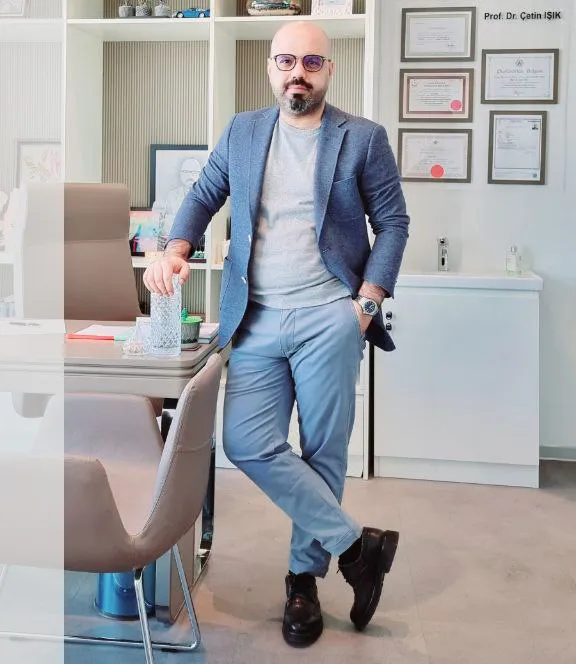
Featured Treatments
Knee and hip replacement restore freedom of movement when pain limits daily life and non-surgical treatment is no longer enough.
In advanced knee osteoarthritis, when medication and physiotherapy no longer control the pain, the damaged joint surface is replaced with a prosthesis.
Performed for hip osteoarthritis, avascular necrosis and hip fractures, to relieve pain and restore the ability to walk.
Areas of Expertise
Surgical and non-surgical treatment for the full range of musculoskeletal and joint conditions.
Arthroplasty and joint replacement surgery: knee and hip prostheses, revision surgery and robotic-assiste…
Read more → ✚Arthroscopic and sports surgery: meniscus tears, cruciate ligament injuries, cartilage damage and shoulde…
Read more → ✚Trauma surgery for fractures, dislocations and injuries: emergency assessment, surgical fixation and reha…
Read more → ✚Hand surgery is a surgical branch that treats hand and wrist-related disorders. Experts are here for hand…
Read more → ✚How is limb lengthening surgery performed, who is a suitable candidate, and how long does recovery take? …
Read more → ✚What causes hallux valgus, what are the symptoms of a bunion, and when is surgery needed? Non-surgical op…
Read more →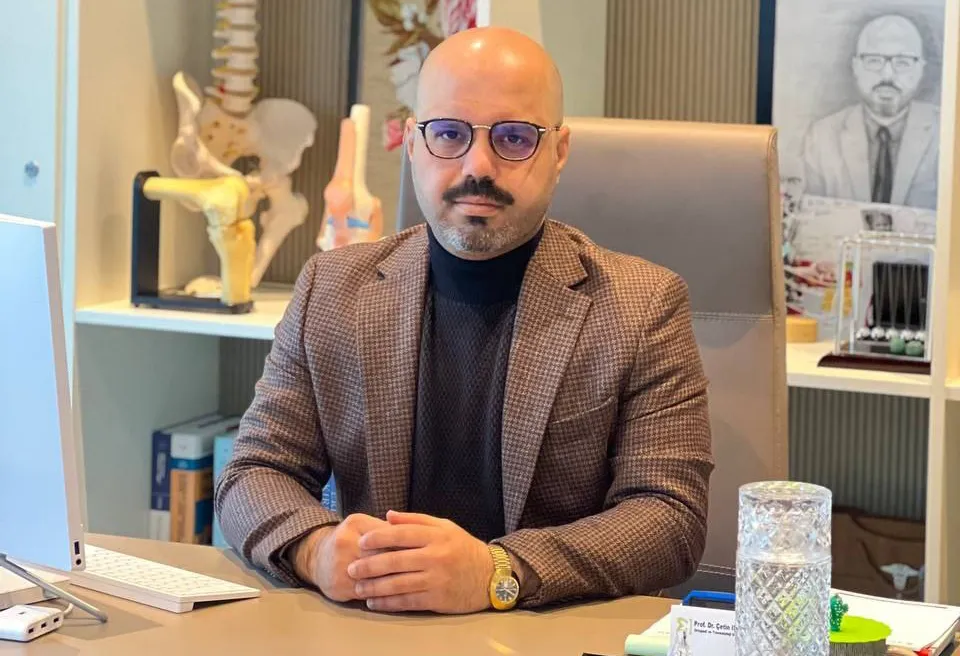
About
Prof. Dr. Çetin Işık, an orthopedic and traumatology specialist, was born in 1981 in Mardin. He completed primary, secondary, and high school with honors. He scored the highest in the university placement exam in Mardin, securing a place at Ankara University Faculty of Medicine. After graduating from Ankara Faculty of Medicine in 2005, he specialized in Orthopedics and Traumatology at the Ankara Diskapi SSK Hospital. He presented his specialty thesis in 20…
Treatments
How We Work
We agree on a suitable day by phone or WhatsApp.
We listen to your complaint, examine you, and confirm the diagnosis with any imaging needed.
Surgical and non-surgical options are discussed together with the results you can expect.
Post-treatment checks and rehabilitation are managed together.
Knowledge Centre
Regular exercise after total hip replacement improves mobility, preserves muscle strength, a…
Read article →
You can speed up recovery by doing physical therapy and maintaining a healthy diet.…
Read article →
Total hip replacement surgery may involve complications such as blood clots, prosthesis loos…
Read article →Frequently Asked Questions
After an examination we can be clear about the cause of your pain and the treatment options that suit you. Reach us by phone or WhatsApp to arrange an appointment.
Appointment Request
Leave your number and we will get back to you shortly. For urgent matters you can reach us directly on 0532 407 80 11.